Time and Nature
Research Station
ABOUT PLACE
A new chapter
in the history of
Świdno Palace
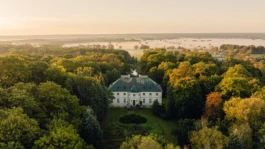
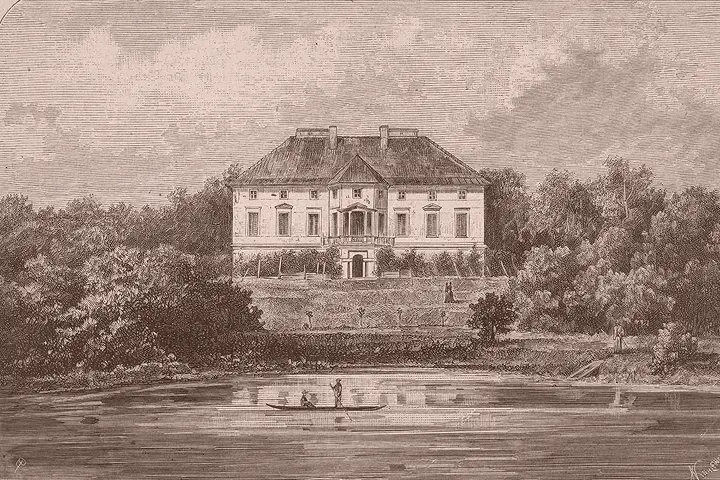
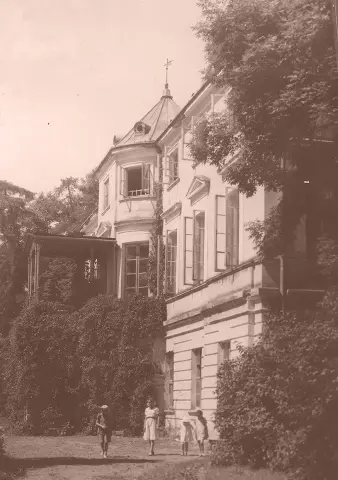
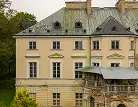
Świdno is the ancestral home of the Świdziński family of the Półkozic coat of arms, first mentioned as early as 1329. The Baroque-Classical palace, now listed as a historic monument, was built from the mid-18th century onwards, surrounded by a historic landscape park and the Pilica valley.
Over the course of two centuries, the residence changed hands and saw its purpose shift: from a country estate, to a centre of learning, and then through years of neglect.
Today, a new chapter in its history begins.


The current owner of the palace and one of the driving forces behind its regeneration is Marcin Rusak – a designer and the founder of the Świdno Foundation. It is he, together with his team, who is giving this place a new direction: a laboratory of time, nature and matter.
Find out more
1329
The first mention of the Świdno estates
Świdno is mentioned in the Diplomatic Code of the Duchy of Mazovia as the ancestral seat of the Świdziński family, bearing the Półkozic coat of arms.
MID-18TH C.
The start of construction of the Palace
Construction of the mansion is begun by Stanisław Antoni Świdziński, the voivode of Rawa.
EARLY 19TH C.
The final design and the park
The palace took on its present form during the time of Antoni Świdziński; a landscape park was laid out around it, work on which was later continued by the Stadnicki family.
1842–1909
Adam Boniecki
Adam Boniecki – a distinguished heraldist and author of Herbarz Polski – becomes the owner of the estate.
1945
Nationalisation
After the war, the estate was nationalised and divided up; the palace changed its use several times – from the headquarters of an institute to a private conference centre.
1970
Polish Academy of Sciences – Institute of Physical Chemistry
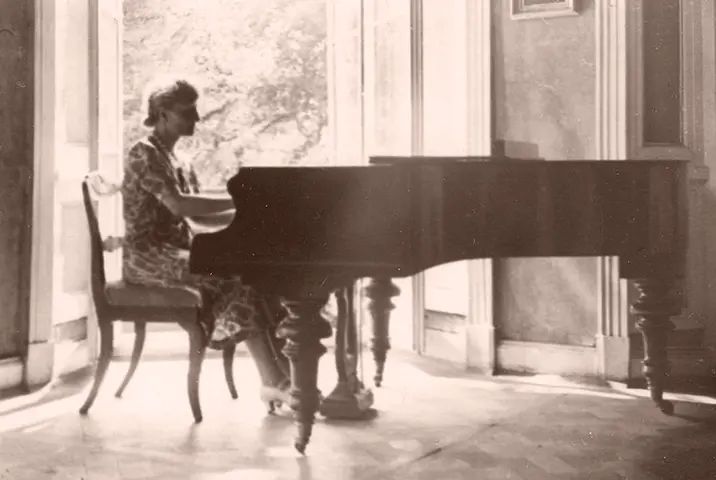
The Institute took over the palace with a view to housing the Threshold Signals Laboratory there – a research unit carrying out work that required an environment free from electromagnetic interference. In addition to the laboratory spaces, the building also contained guest rooms intended for the Institute’s staff.
1990S
Return to the Family
Following the political changes, the family of heirs regains their rights to the estate.
TODAY
A new chapter – the Świdno Foundation
Marcin Rusak is undertaking the restoration of the palace and opening it up to the arts, science and education by establishing the Świdno Foundation.
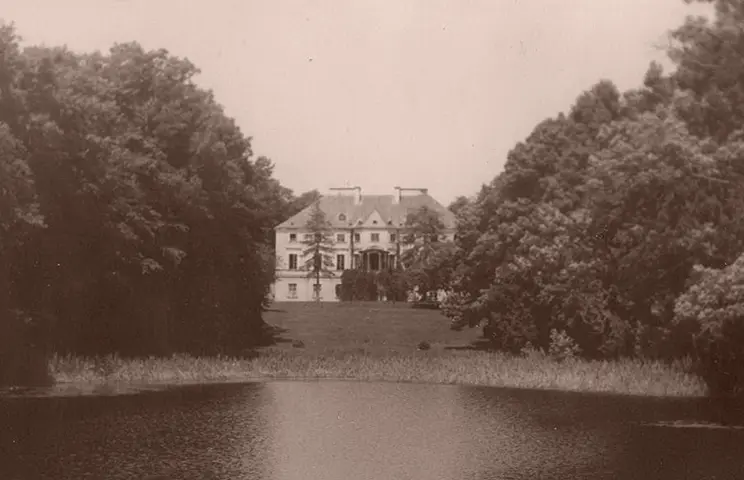
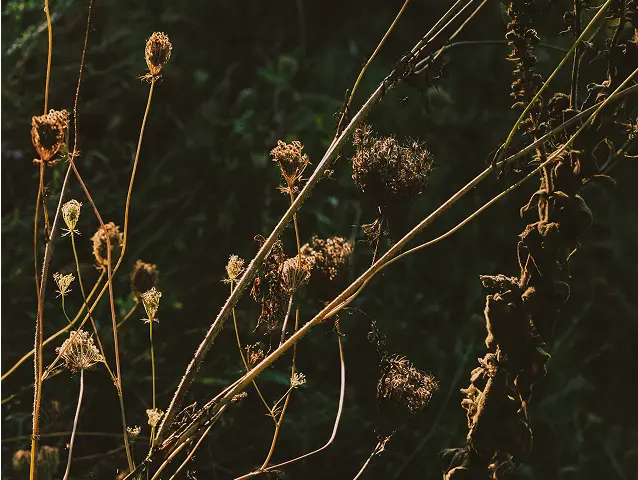
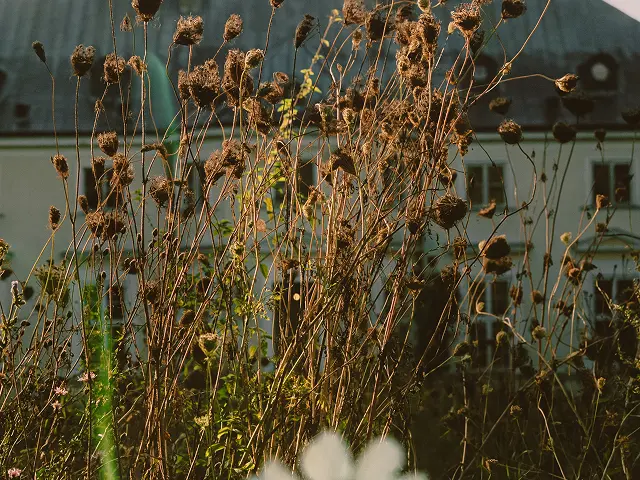
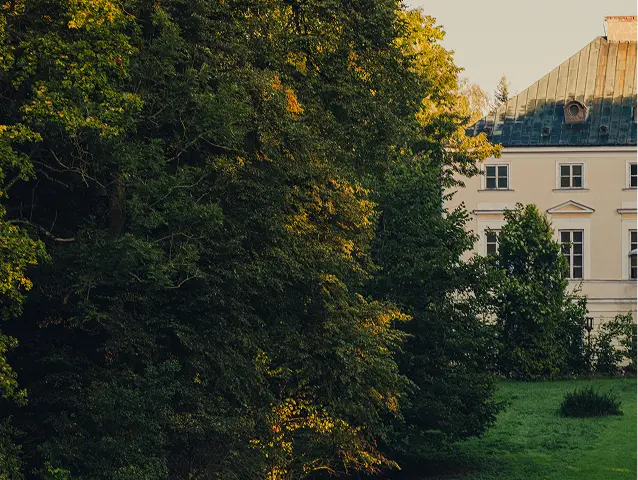
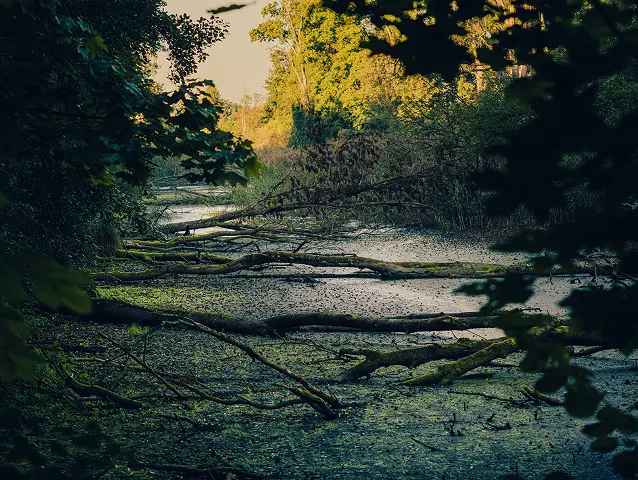
The park surrounding Świdno is part of this place’s history. Old trees grow here, traces of the park’s original layout have been preserved, and the surrounding landscape has for generations been shaped by the orchards characteristic of the Grójec region.
For the Foundation, the park is a space that we wish to look after and get to know better. We are interested in both its history and how it is changing today – with the changing seasons, the plants, the animals and the people who use it.


In the coming years, the park will be gradually restored whilst respecting its character. We want to protect the existing trees, enhance biodiversity and reintroduce species associated with the local landscape. We believe that caring for nature begins with careful observation and an understanding of the place.
The park will be open for walks, gatherings, workshops and exploring nature together. It is intended to be a place where you can slow down, take in your surroundings and get to know the landscape of one of Poland’s oldest fruit-growing regions better.


ABOUT THE PROJECT
3 Pillars
of the Project
A new cultural institution
The project aims to create a space where history, nature and contemporary culture complement one another. The Świdno Foundation will develop an educational and cultural programme based on the relationship between design, craftsmanship and nature, inviting people to explore, learn and take action together.
Restoration of a historic building
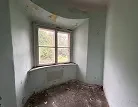
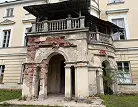
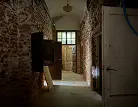
The planned works aim to restore the historic Palace in Świdno to a usable condition. The building has been inaccessible for many years due to its state of disrepair and requires comprehensive renovation and conservation work.
Building the region’s identity
The Świdno Foundation’s programme is being developed in consultation with residents and local organisations. Public consultations have helped to define both the future functions of the historic palace and the direction of the cultural, educational and social activities to be carried out there.
The programme being developed will address the needs of various groups – children, young people, adults and older people – with a particular focus on those who have limited access to culture in their daily lives, including people with disabilities. The Foundation’s aim is to create a place that is open, accessible and inviting, encouraging active participation.
FOUNDATION PRINCIPLES
Matter as a
process, not
a product
The Świdno Foundation was established to explore, preserve, and creatively interpret the relationships between time, nature, and matter. At the Palace in Świdno, we aim to create a laboratory where materials and the processes of aging and decay will be tested—a place that teaches us to view matter as a process rather than a product
Building on the tradition of the former Threshold Signals Studio—a place of silence and contemplation—we plan to develop a contemporary “studio of the threshold of time and matter,” ultimately open to workshops, exhibitions, and artist residencies.
Science and Education
Planned research on natural and ephemeral materials, as well as educational programs.
Art and Culture
The goal: residencies, exhibitions, and performances—bringing artists and scholars together in one place.
Heritage Preservation
Preservation of the natural and cultural heritage of the palace and its park. Preservation of intangible heritage


FOUNDER
Marcin Rusak
Marcin Rusak – artist, designer and founder of the Świdno Foundation. In his practice, he explores the relationships between nature, time and materiality, using botany as a tool for understanding and as a starting point for creating objects, installations and new materials. His works lie at the intersection of art, craft and scientific research, and their common thread is the observation of processes of growth, decay and preservation.
Marcin Rusak’s works have been exhibited at international exhibitions and are held in private and institutional collections around the world.

PRESIDENT OF THE FOUNDATION
Tamara Pilawska - Baranowska
Tamara Pilawska-Baranowska – a strategist and manager who has helped shape the development of Marcin Rusak Studio since its inception. She is responsible for the organisation’s long-term development, establishing its operating models and creating structures that enable the combination of ambitious creative practice with responsible and sustainable growth.
As the founder and Chair of the Świdno Foundation, she is responsible for advancing its mission and building a space open to research, education and collaboration. She believes that enduring institutions arise where a commitment to heritage meets the courage to think about the future, and where local resources become a catalyst for creating new value for the community and culture.

PROGRAM DIRECTOR
Agata Stafiej - Bartosik
Agata Stafiej-Bartosik – an expert in the fields of social innovation, sustainable development and fostering collaboration between the public sector, the business sector and civil society organisations. For many years, she has been supporting the development of initiatives that combine knowledge, entrepreneurship and social engagement to create sustainable solutions that address contemporary challenges. She is the Director of Ashoka Poland and a co-founder of numerous projects in the field of responsible development and cross-sector partnerships.
At the Świdno Foundation, she brings her experience in designing collaborative initiatives, engaging communities and developing projects with long-term social impact. She supports the creation of a space where research, education, culture and nature conservation come together to form a shared arena for dialogue and action.

The Grójec region has been shaped by fruit growing for generations. It is here that one of Europe’s most significant cultural landscapes associated with fruit tree cultivation has emerged – a mosaic of orchards, avenues, farms and small villages, whose rhythm is dictated by the changing seasons. The heritage of this place lies not only in the orchards themselves, but also in the knowledge passed down from generation to generation: skills in cultivation, tree grafting, fruit storage, local customs, the seasonal nature of the work, and the strong bond between the inhabitants and the landscape. It is precisely this intangible dimension that constitutes one of the region’s most valuable assets.
At the same time, the region now faces the need to seek new avenues for development. Traditional agriculture and agritourism remain an important part of the local economy, but culture, education and tourism based on experiencing the local area are becoming increasingly significant. The proximity to Warsaw, the well-preserved landscape of orchards and the Pilica Valley – one of the last large rivers in Poland to retain its natural character, distinguished by its wealth of habitats, birdlife and riverside ecosystems – create exceptional conditions for the development of day-trip cultural and nature tourism.
Examples of such places already exist in Poland. The Centre for Polish Sculpture in Orońsko, Xawery Wolski’s studio and the Fangora Foundation demonstrate that cultural institutions located outside major cities can become destinations in their own right, fostering local identity and supporting regional development. The Świdno Foundation is developing along similar lines – as a centre for research, education and culture rooted in the landscape of orchards and the history of the Grójec region. Its aim is not to replace existing initiatives, but to complement them with a new dimension that combines nature, design and cultural heritage.

The Świdno Foundation is located near the Pilica Valley—one of the most ecologically valuable landscapes in central Poland. The naturally meandering river, oxbow lakes, sandy sandbars, floodplain meadows, and riparian forests form a mosaic of habitats that has served as a refuge for many plant and animal species for decades. This unique character led to the valley’s inclusion in the European Natura 2000 network of protected areas, which safeguards both valuable habitats and species critical to preserving biodiversity on a European scale.
The proximity of this landscape is an important part of the Świdno Foundation’s identity. Here, nature is not merely a backdrop for cultural activities, but a starting point for research, education, and building relationships between people and the environment. The coexistence of natural and cultural heritage creates a unique context for developing programs dedicated to the conservation of biodiversity, the landscape, and knowledge about local ecosystems.

Time and Nature Research Station
1329
The first mention of the Świdno estates
Świdno is mentioned in the Diplomatic Code of the Duchy of Mazovia as the ancestral seat of the Świdziński family, bearing the Półkozic coat of arms.
MID-18TH C.
The start of construction of the Palace
Construction of the mansion is begun by Stanisław Antoni Świdziński, the voivode of Rawa.
EARLY 19TH C.
The final design and the park
The palace took on its present form during the time of Antoni Świdziński; a landscape park was laid out around it, work on which was later continued by the Stadnicki family.
1842–1909
Adam Boniecki
Adam Boniecki – a distinguished heraldist and author of Herbarz Polski – becomes the owner of the estate.
1945
Nationalisation
After the war, the estate was nationalised and divided up; the palace changed its use several times – from the headquarters of an institute to a private conference centre.
1970
Polish Academy of Sciences – Institute of Physical Chemistry
The Institute took over the palace with a view to housing the Threshold Signals Laboratory there – a research unit carrying out work that required an environment free from electromagnetic interference. In addition to the laboratory spaces, the building also contained guest rooms intended for the Institute’s staff.
1990S
Return to the Family
Following the political changes, the family of heirs regains their rights to the estate.
TODAY
A new chapter – the Świdno Foundation
Marcin Rusak is undertaking the restoration of the palace and opening it up to the arts, science and education by establishing the Świdno Foundation.
